
by Ben Pursel
October 1 marks the 39th anniversary of the American Library Association’s Banned Book Week. Established in 1982 by Director of the Office of Intellectual Freedom (OIF) and First Amendment advocate Judith Krug, Banned Book Week began in lue of a sudden surge in challenges to “controversial” books as well as the Supreme Court Decision in Island Trees School District v. Pico (1982) which ruled that school officials cannot ban books in their libraries simply because of content. The event sought to draw attention to an increasing number of novels being taken from shelves, among them Slaughterhouse-Five, To Kill a Mockingbird, and Catcher in the Rye.
Today, nearly four decades after its founding, Banned Book Week continues its mission to protect intellectual freedom and defeat censorship, but has faced increasing levels of resistance. Betsy Gomez, writer for bannedbooksweek.org, said: “With book bans on the rise, it is absolutely essential that people do something — anything — to defend books from censorship in their communities.”
Since 2020, the number of books challenged nationwide has risen an unprecedented 942%. “It’s being driven by legislation, it’s being driven by politicians aligning with one side or the other. And in the end, the librarian, teacher or educator is getting caught in the middle,” said Britten Follett, executive at Follett School Solutions, one of the nation’s largest K-12 book providers.
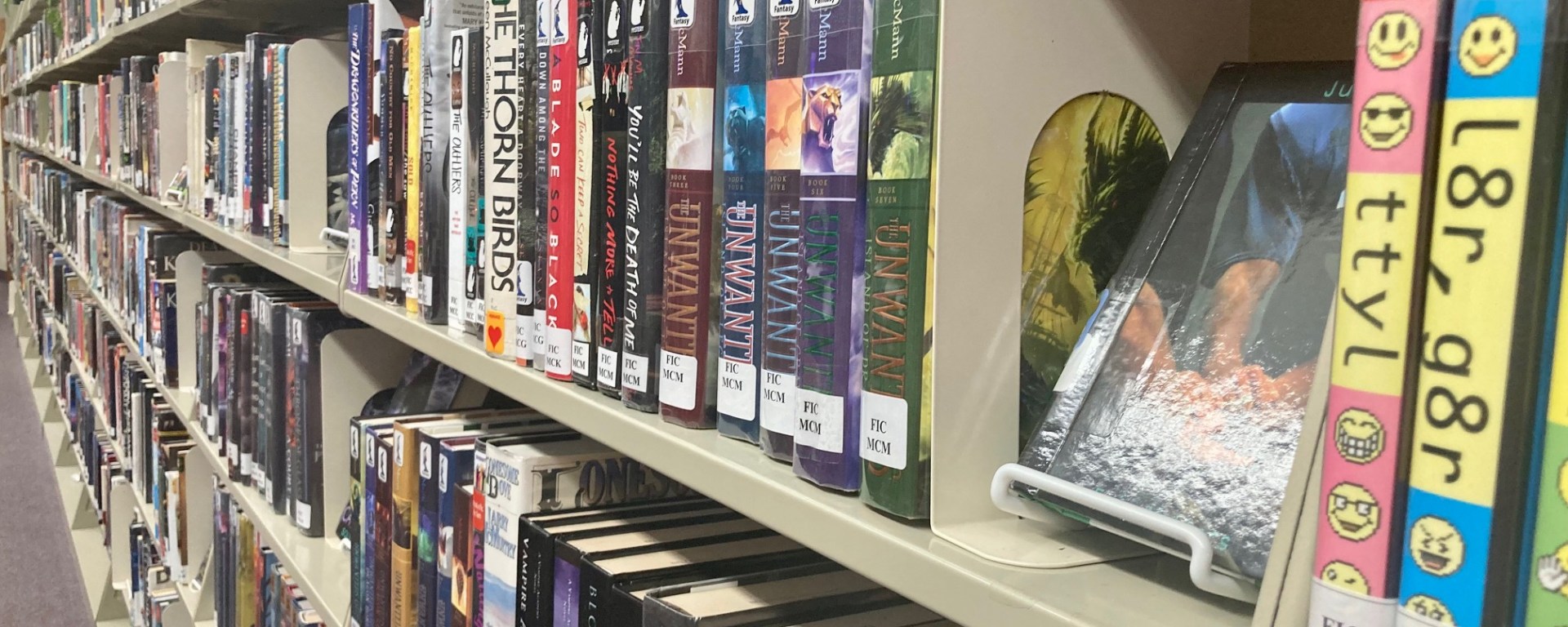
Nancy Sumner, Bellbrook-Sugarcreek school district library worker of 25 years, feels there is mounting pressure and scrutiny over libraries. “In my 25 years, I’ve never had a parent complain about a book and I’ve never had to take one off my shelves,” Sumner said. “But with the increasing number of books being banned around the country, I’m worried that I might have to.”
“Reading is a basic right,” Sumner said. “As free thinkers, we should all have the right to read what we want and decide for ourselves if a book is appropriate for us or not. If we don’t like a certain book, we have the right to not read it, but we don’t have the right to remove it from others.”
The district does have methods in place to support parent requests for their child’s reading material. “If a parent doesn’t want their child to read certain books,” Sumner said, “We librarians can add a note on that child’s account that they can’t check out a certain book. It doesn’t need to be taken out for all of the other students.”
Recent book bannings have also come under criticism for their disproportionate censorship of minority stories. The Center for American Progress (CAP) reports that 41% of book bans in 2023 include a protagonist or prominent character that is a person of color, 22% directly address issues of race and racism, and nearly half–45.5%–were written by or about LGBTQ+ people–the most banned book in the United States being Maia Kobabe’s Gender Queer: A memoir. The American Library Association lists the reason for the upheaval over the novel as “LGBTQIA+ content and claimed to be sexually explicit.”
“Books give people hope,” Sumner said. “If a student reads a book and relates to one of the characters going through a hard time and sees the character survive it, it gives them hope to work through whatever they’re going through. Books are ways to learn about how other people live. Learning about social justice and how other people live at a young age prepares students to be informed and compassionate citizens of the world.”
 EagleView News