
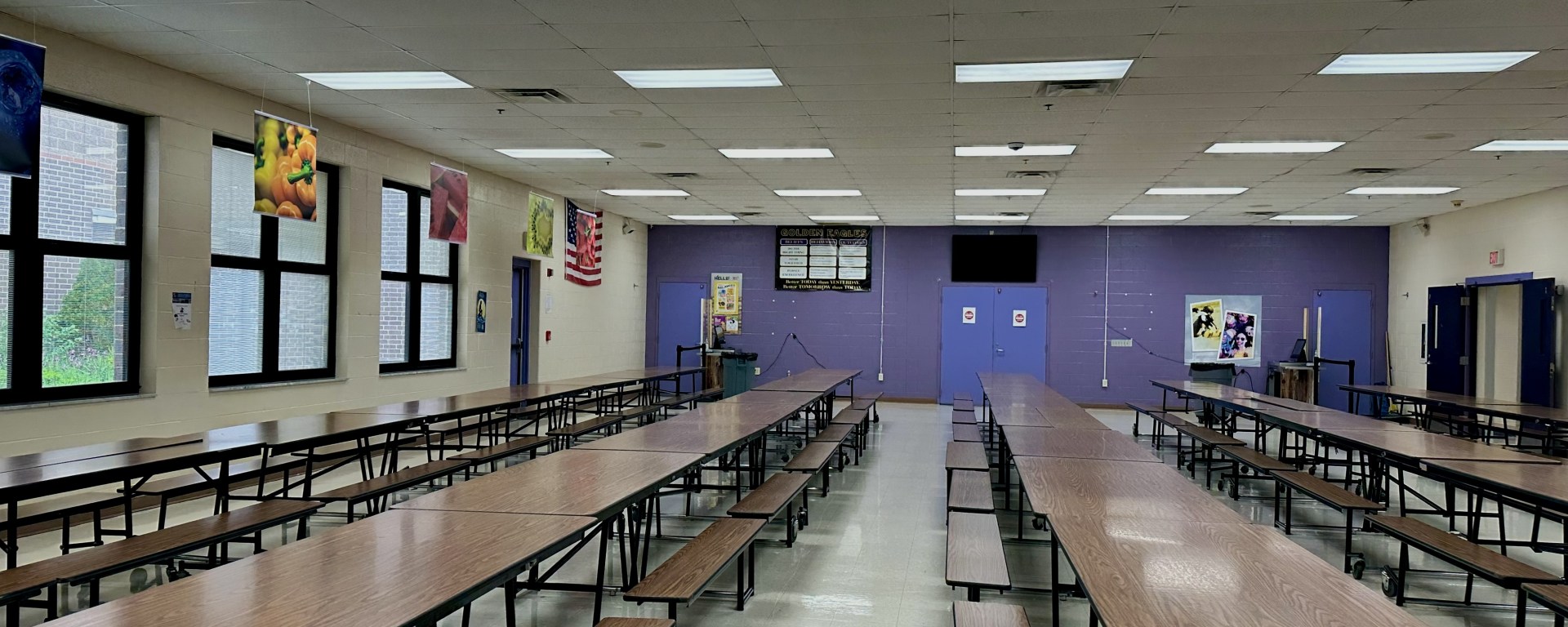
by Aly West
“If I went out to any of the trash cans in the cafeteria, it would have to be apples, raisins, and any kind of fruit or vegetable being thrown away the most,” Bellbrook Sugarcreek Schools food service general manager, Jennifer Hoehn said. “When the student receives their lunch, there is nothing that we can do about whether you eat it or not.”
However, BHS cafeteria makes it their priority to minimize the amount of food waste coming out of the kitchen by keeping records of food produced and tossed each day. They even plan out the cafeteria’s menu every five weeks. This helps the kitchen staff plan what items are going to be served and which items were untouched.
“The goal is to plan ahead, and if a perishable food is going to waste, we want to focus on that and try to push it out,” Hoehn said. “We’re preparing most of the food while the students are waiting in line. We call it batch cooking, putting out just enough food to minimize waste.”
Bellbrook Sugarcreek Schools in the past has donated many perishable items to the Bellbrook-Sugarcreek Community Support Center. Especially during the height of the pandemic and the days schools were closed, leftover food went to the community.
“We were knocking on people’s doors with food donations,” Hoehn said. “We got to know this community on a more intimate level.”
Hoehn has recently started a new program called Waste Watch, powered by Lean Path. It allows the food service staff to measure food leftovers by quantity rather than weight.
“Measuring changes the behavior of our company and our people when it comes to waste,” Hoehn said. “When you see waste and you put it all on a table at the end of the day, it makes you think, ‘What can I do to limit that?’ When you see just five pounds of waste, can you get it down to one pound to only stuff that is unavoidable like ends of carrots that you wouldn’t eat?”
Hoehn plans to introduce Lean Path this summer for staff to implement next school year, 2024-2025.
“These are human beings. There are people in the kitchen trying their best to make sure every student has an opportunity to get what they want. It’s not perfect; they’re not perfect. In a perfect world, even if you tried yourself, you would run into errors.”
From time to time, the cafeteria has no control to prevent food waste, such as snow days, holiday breaks, and field trips. Sports can even play a role in a student’s diet. “Think of your fall sports, some of those are hardy sports. You might be doing carb loading or the exact opposite,” Hoehn said.
It’s hard to introduce new foods to students without having them go to waste the first few times, Hoehn said. “When we first started serving roasted zucchini, it was wasted. Until you get used to eating it, eating it at home, and deciding you like eating roasted zucchini, it is going to go to waste.”
“Then before you know it, I can’t keep it in stock,” Hoehn said. “Students really determine what gets eaten and what gets wasted.”
Introducing new healthy produce to the menu can be beneficial to students. “When we first started serving spinach in 2011, it was wasted. But now you guys eat spinach so well. You stick spinach in salad, you are eating spinach and you probably didn’t even know it.”
“We might down the road try brussel sprouts or butternut squash,” Hoehn said. “We’re always trying new things and getting you guys used to new foods.”
“At the end of the day I hate to see people go hungry. It makes me sad. That will bring me to tears.”
 EagleView News