
By Delaney Dine
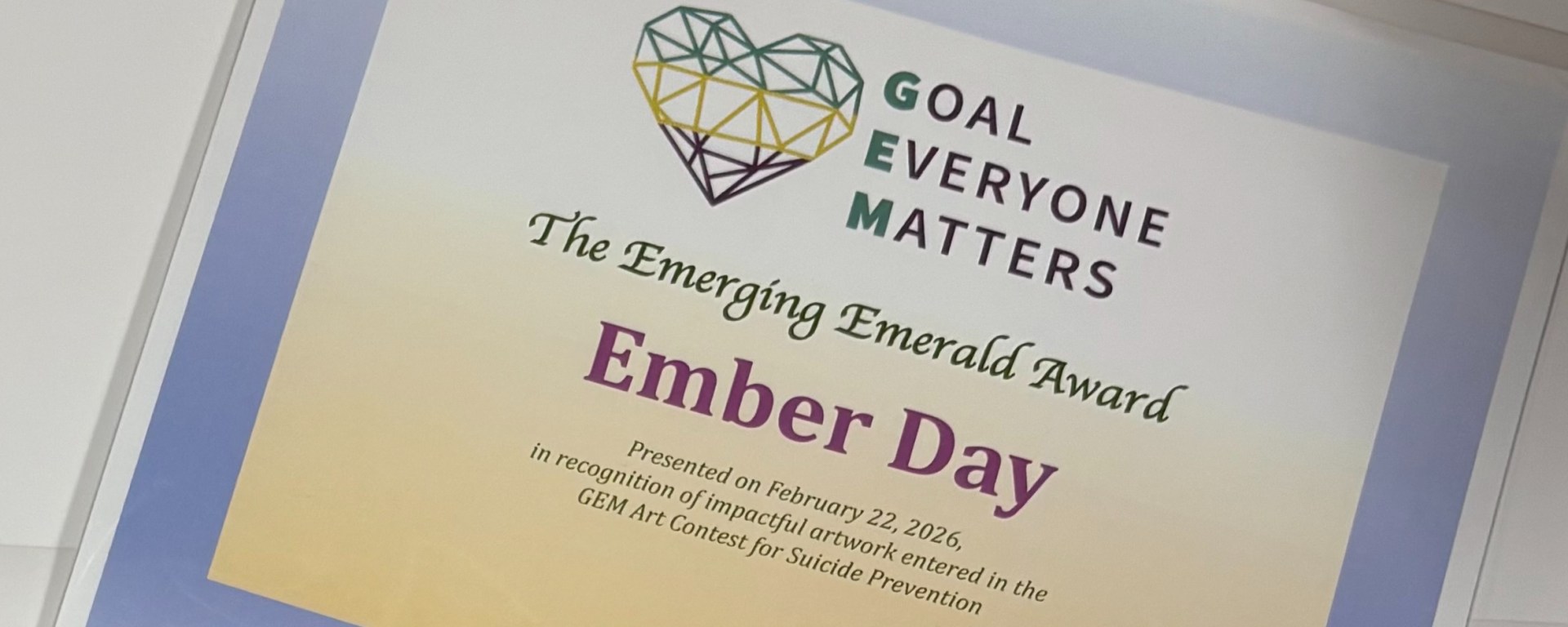
Sophomore Ember Day received an award for her submission in this year’s GEM Art Contest. The contest received 135 entries from 46 schools, 28 high schools and 18 middle schools. Last year, the contest had half as many schools send in entries.
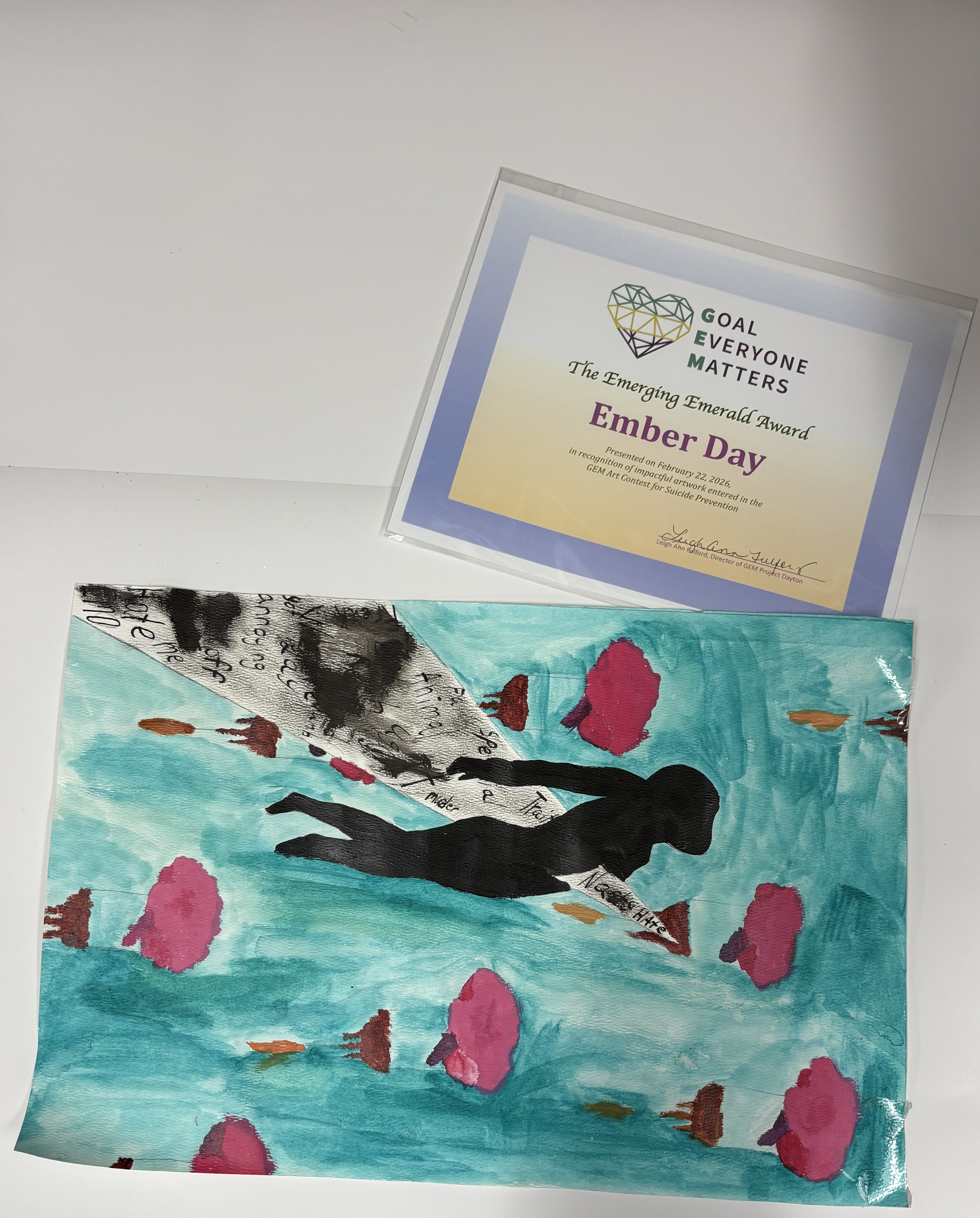
The 2025-2026 prompt was centered around resilience since the goal of the contest is suicide prevention and awareness. “I based my piece basically on the word resilience itself,” Day said.
Preparations for an art contest can be expansive and vary from one competition to another.
“They’re all kind of different, depending on the various requirements,” Bellbrook High School art teacher Shannon Parsons said. “For example, one competition might ask for a writing piece, which we call an artist statement. Others might actually provide you with a template, and you just fill in your design, so there are different levels to the prep requirements.”
“Art does often take a lot more time than people expect it to take, because we go through so many revisions and edits that we need to make. It’s not always a straight line,” Parsons said. “Most students put in at least several hours, if not more.”
“I did a lot of testing on colors and a lot of practicing to choose this piece,” Day said.
The benefits outside of the award are important too. These awards are often used for college applications, as a way to add to resumes and a way to practice if they wish for a future in art.
“It’s a really good resume builder,” Parsons said. “Even if students aren’t planning to go into the visual arts, having something on the resume that shows that they were doing outside of school has always been beneficial. It helps students learn and practice how to present their work in a professional way.”
“I actually want to go into business management or government so personally, I’ve established art as a way to help strengthen critical thinking and a way to build my confidence in these situations,” Day said.
“It’s a different skill builder to learn how to actually talk and defend your work,” Parsons said. “But also learning how to present work professionally instead of turning it into a teacher in class.”
There are a total of 17 judges looking through entries: seven student judges, trained in suicide prevention, and ten adult judges. Out of the adult judges, six are artists and four are mental health professionals or volunteers in suicide prevention.
 EagleView News