
By: Nora Scarbro
The first amendment grants Americans the right to “peaceably to assemble, and to petition the Government for a redress of grievances.” In other words, to protest. When protesting, you are displaying your opinions, meaning some people might disagree with you. With that in mind, it’s important to prepare to stay safe and express your opinions effectively. Before going to a protest, there are some things to do.
Some protests can lead to violent confrontation, so do your research. If you are going to a protest that is likely to escalate, you have to be prepared. It’s important to find a group of people to go with. If you have people at the protest who know you and care about you, there is a guarantee someone is looking out for your safety. They can create a sense of safety for you that creates assurance you are protected.
Learning about the location itself can be life-saving. Wright State freshman and former Bellbrook student Alyssa Lawson has a lot of experience with a diverse amount of protests. “Know your rights. I always check if the protest is a public or not public space,” said Lawson as each space has different rules.
If you decide to go to attend a protest alone, there are some very important things to do beforehand. Alert multiple people you are going to the protest, and tell them the location and set a scheduled time you will contact them so they know you are safe. However, alerting people that you are going to a protest is something that you should do even when you are going with a group.
Another important thing to do if you are going alone is to try and find at least one person who you know can help if you are stuck in an unplanned situation.
If you know you are going to a protest that may escalate to attacks on protestors, ask the people in your life to help you prepare for the worst. One way to do this is to make a code word to quickly text telling those people you are unsafe.
There are also things you can bring to a protest that could protect you further like a heavy duty mask. This is a tool that is multi-purpose, since it can shield your identity if needed and be used as a safety against irritants that could be put in the air to disperse crowds. It’s also important to dress for weather, temperature, and mobility.
Bring a lot of water. This could be used to flush your eyes if you encounter tear gas as well as keep you hydrated. It is a common misconception that milk helps with tear gas, but milk can actually make the effects of tear gas worse.
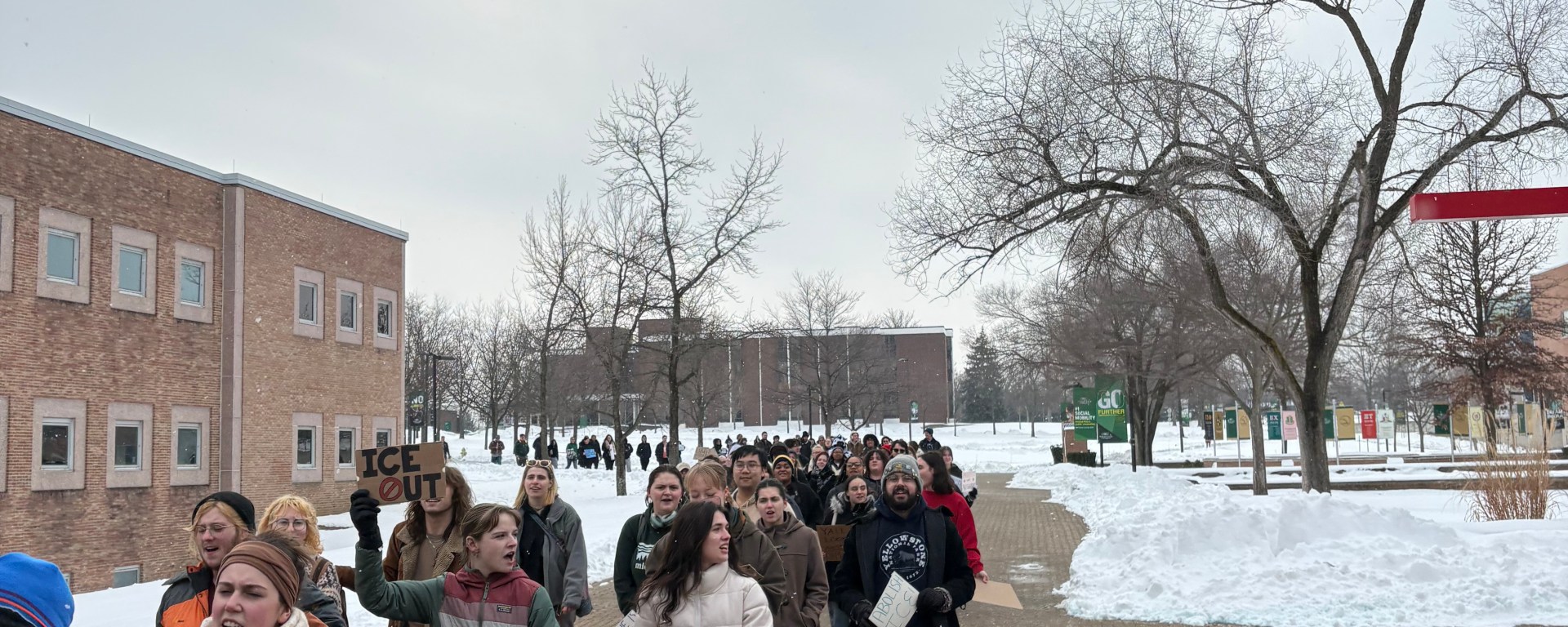
Signs are a common feature at peaceful assemblies. You could find inspiration online or create your own. It can be a clever play on words, a direct expression of your thoughts, or a pop culture reference. Chants are often part of protests, as well, with the most common: call and response, so listen to protest leaders.
While protesting, the most vital thing to do is stay peaceful and follow the directions of the more experienced members of the crowd. Use your freedom of speech to protest, use it loudly and passionately, but don’t use your voice to invoke violence. “It’s the best option to leave and show up the next day than it is to never be able to show up again,” Lawson said.
 EagleView News